
Good memories are nice.
But good memories with no proof are not enough.
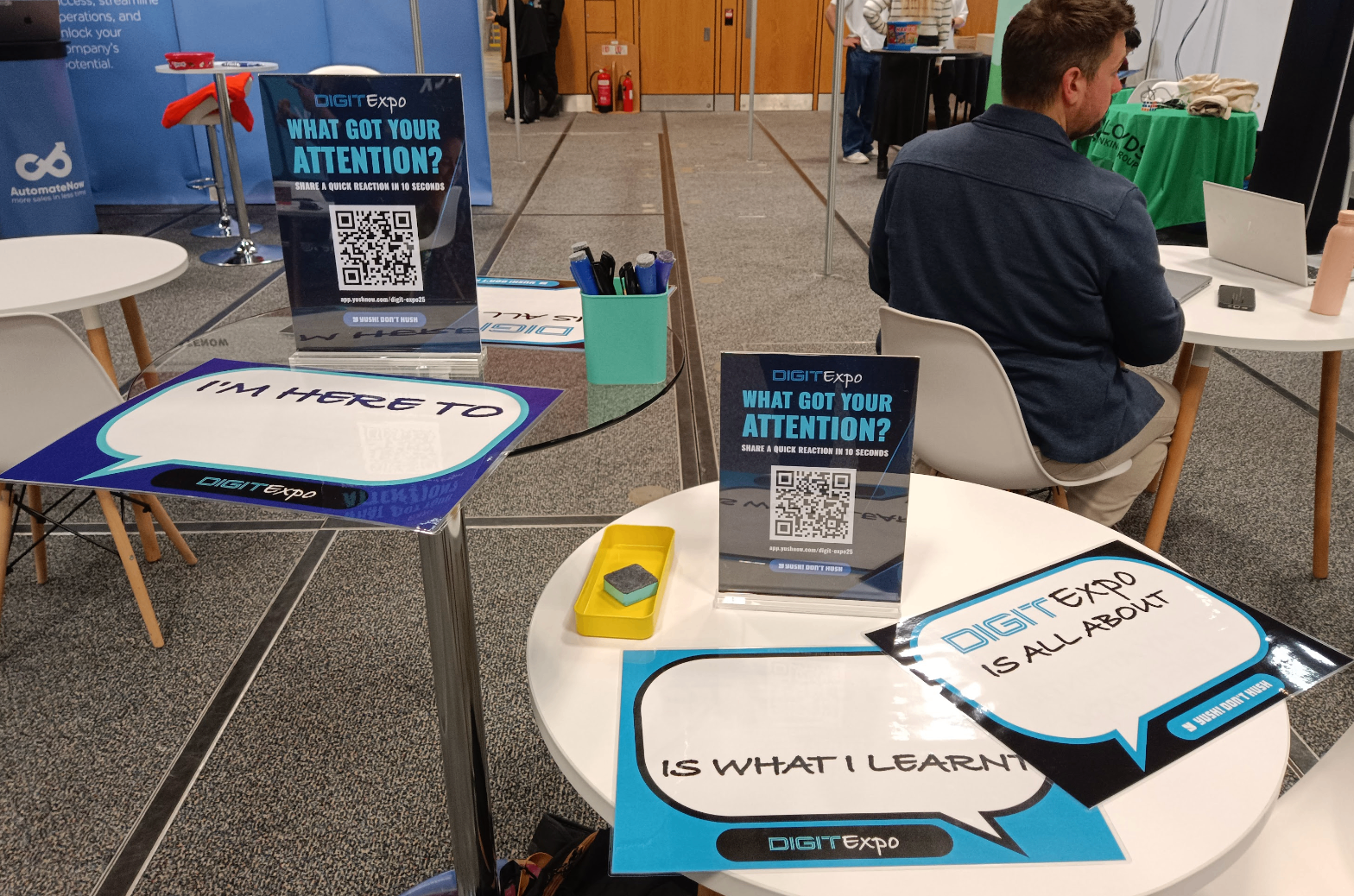
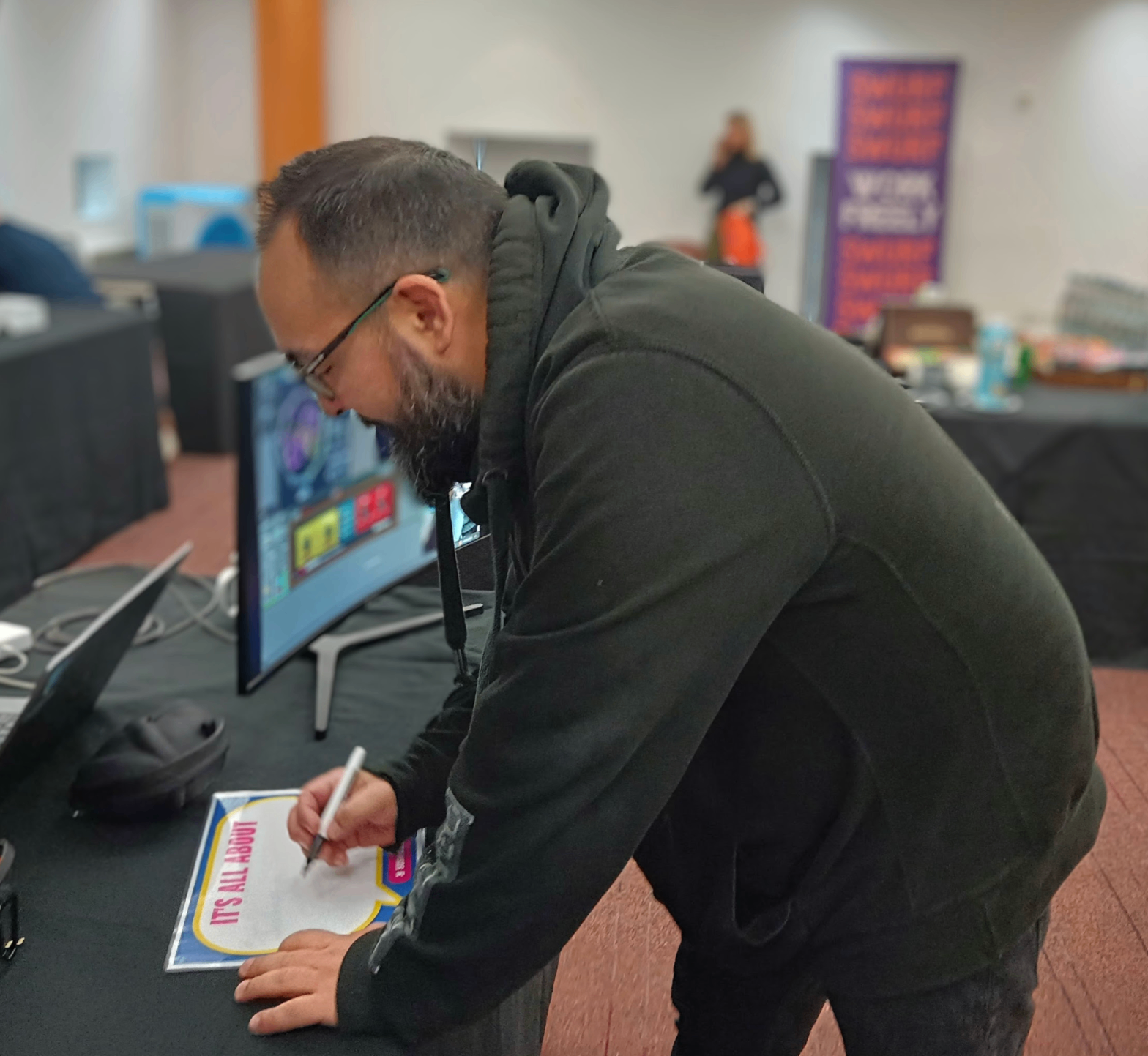
Yush helps event organisers capture real audience reactions while the moment is still live, then turn them into something useful afterwards.

Shuli, founder of Yush — speaking with attendees at a live event.
Why we built Yush
The most useful feedback is often not a form response.
It is the photo someone takes of a slide because it made something click.
The note they write down during a talk.
The quick "that was actually useful" they say to the person next to them.
The question they wanted to ask but did not.
The moment they remember later, but never put into a survey.
Live events are full of these small signals. But when the event ends, everyone is tired, and organisers are left trying to piece things together from memory, scattered posts, and a form that arrives too late.
The problem is that most feedback tools are badly timed for live events. They ask later, when people have moved on, the detail has faded, and organisers are left trying to reconstruct what happened from memory, scattered posts and a few survey responses.
Yush exists because those small reactions are worth capturing while they are still fresh.
A note from the founder
I built Yush because I kept noticing the same problem in different places.
I used to work in ecommerce reviews, where I helped grow a product-reviews platform to 500K users. Over time, I got pretty skeptical of shallow feedback and vanity metrics. Star ratings, NPS and polished summaries often looked useful on the surface, but they rarely captured what people actually felt or why.
Later, when I moved to London, I found it surprisingly hard to tell which conferences were worth going to, especially when tickets were so expensive. I wanted to find out what other attendees experienced and thought of the event, but often only found noise from organisers, sponsors and speakers promoting themselves.
But once I actually got to the event, I saw people taking notes, snapping pictures of slides, and taking candid photos with people they had just met. The signal was clearly there. It just was not making its way back in a useful form.
I felt it even more when we ran our own networking events. We were too busy setting up, hosting and keeping the energy up to gather the quotes, photos and reactions we wished we had afterwards. We came away with good memories, but no proof, no assets, and no real insight into what had actually landed.
That was the point when it clicked for me.
"If something mattered in the room, it should not disappear afterwards."
Most of the usual tools ask too much, too late. Yush is built around a simpler idea: if something mattered in the room, it should not disappear afterwards.
Because of my background in psychology and product, I think a lot about timing, friction and social context, not just whether a survey link exists. I am also someone who is used to being overlooked, so I care about whose voice gets captured and whose gets missed.
Yush is my attempt to make those reactions easier to catch before they disappear.

DON'T HUSH.
What stood out today?
Why the name Yush?
People ask us this a lot.
Yush is a short, energetic brand word. To us, it feels like a reaction, a prompt, and a live check-in all at once.
The simplest way to explain it is this:
Yush is about capturing the reactions people usually keep to themselves.
That is why we say:
Yush! Don't hush.
It is an invitation to speak up while the moment is still fresh — before what people noticed, felt, valued, questioned, or wanted to say gets lost.
Four things we keep coming back to.
Yush is built around a few simple ideas about how people actually respond in live moments.
Ask while the room is warm.
The best signal usually appears in the moment, not days later. Timing changes what people remember, what they notice, and whether they respond at all.
Make it easier to speak up.
Good feedback systems should not only work for the loudest people in the room. A quick, low-pressure response can capture things a formal survey would miss.
Look beyond the score.
A number can be useful, but it rarely tells the full story. Reactions, comments, photos and context help show what actually landed.
Make the reaction useful afterwards.
Feedback should not become more noise. It should help organisers understand what mattered and give them something they can actually use after the event.
Want to see what Yush looks like in practice?
Explore real examples, see how it works, or create your own live reaction page.