What actually gets event feedback responses?
Most event feedback gets ignored — not because of bad questions, but because of bad timing. Learn what actually drives response rates at live events.
Most event feedback gets ignored for a simple reason: the ask comes at the wrong moment.
It arrives by email when the event is already cold. It appears as a QR code when people are trying to leave. Or it feels like a survey that will take too long, so people do not bother.
That is why the real question is not just: What is the best event survey?
It is this: How do you get enough people to respond while the event is still alive, without breaking the flow?
That is the practical problem most organisers are actually trying to solve.
Most event feedback fails before anyone sees the first question
A lot of event teams think their problem is survey design. Sometimes it is. But often the problem starts earlier.
- The survey arrives too late.
- The QR code appears too briefly.
- The ask competes with networking, packing up, or heading home.
- No one explains why it matters.
- No one owns the moment.
That is why many organisers feel they are already doing feedback, but still end up with low response, shallow insight, or comments that are too thin to use in a debrief, event review, or event impact report.
The three main ways organisers collect event feedback
1. Post-event survey
This is the default for many event teams. You send a survey link by email after the event, or include it in a follow-up message through your event platform.
This is easy to organise, but it comes with obvious trade-offs. The event is already over, the room has gone cold, and the survey is competing with inbox clutter, work, travel, and everything else happening after the event.
Post-event surveys can still be useful for deeper reflection or more formal evaluation. But as the only method, they often produce weak response and a narrow slice of the audience.
2. Passive in-event survey or QR code
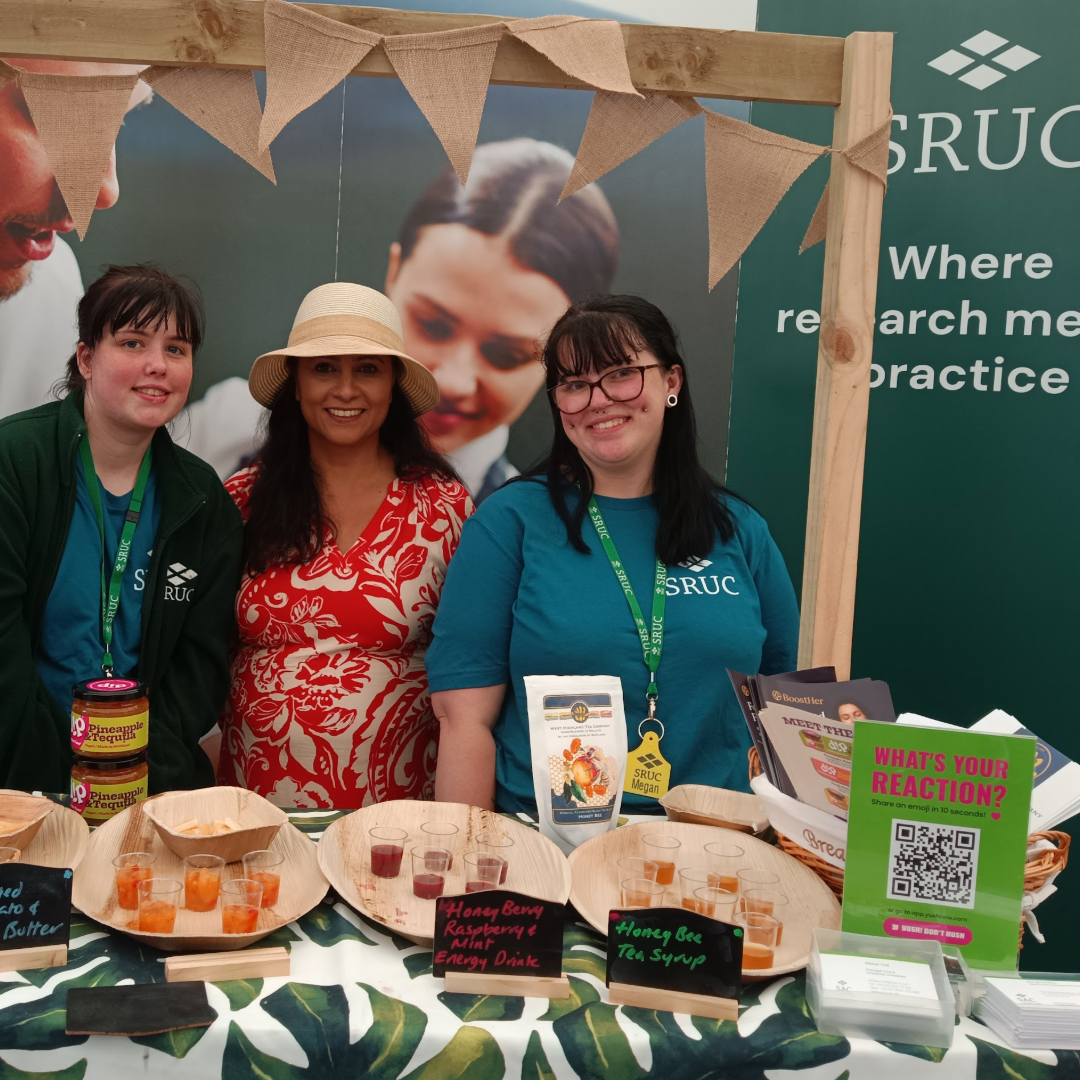
This is when feedback is technically available during the event, usually through a QR code on a slide, poster, table card, event app, or event page.
This is better than email in one sense: the event is still happening. But it often still underperforms because nothing about it creates a real reason to stop and respond now.
3. Live prompted micro-feedback
This is usually the strongest option when done well. It is not just a QR code shown during the event. It is a deliberate response moment. That means:
- the ask is genuinely short — ideally one focused question and under 10 seconds, or at most 10–30 seconds
- people are explicitly told it is short
- they are told why the feedback matters
- they are asked to do it now
- the prompt is timed around a natural pause
- the QR or response path stays visible long enough for people to act
Why active prompting works
People are much more likely to respond when four things are clear:
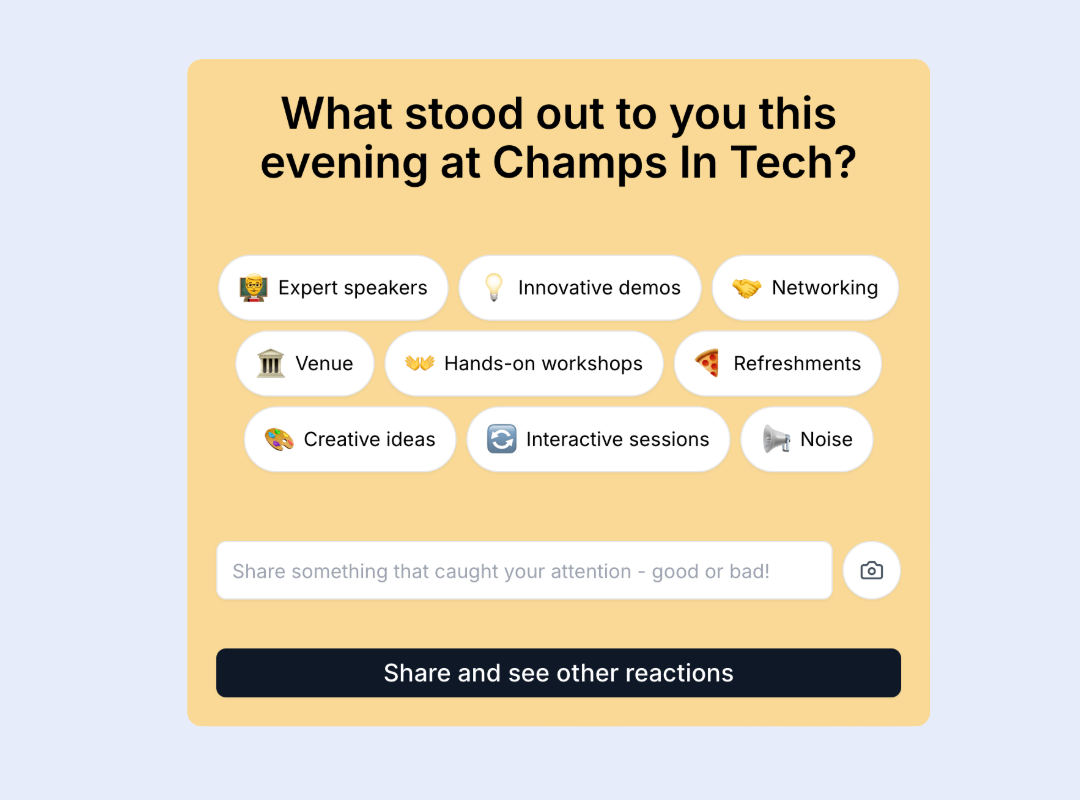
- What this is. Not "Please fill in our survey." More like: "We are collecting quick reactions from the room."
- How long it takes. A "10–30 seconds" framing works because it reduces friction.
- Why it matters. People are more willing to respond when they know what the feedback will influence.
- Why now. A live ask works best when the timing feels like part of the event, not an afterthought.
That is what turns a QR code into a response moment. Read more about what to say when asking attendees for feedback.
When is the best time to ask?
The best time is usually not the final second of the event. The better timing is often just before the event psychologically ends. That could mean:
- after a speaker finishes
- during a seated pause
- before the final break ends
- just before the last segment begins
- after a workshop exercise while people are still in reflection mode
Where should people respond?
Feedback works better where people naturally pause.
- On screen during a break
- Near refreshments
- At sponsor stands
- Beside toilets
- Near exits
- On table cards
- At staffed welcome or ticketing points
Final takeaway
If you want better event feedback, do not just write a better survey. Design a better response moment.
- keep the ask genuinely short
- tell people it is short
- tell them why it matters
- ask at the right moment
- and make it easy to act immediately
That is what actually gets event feedback responses.